How Long Do Mobile Container Houses Last?
In the harsh environment of the Middle East, characterized by heat and sandstorms, the demand for temporary container buildings and prefabricated houses remains consistently high. As a major supplier of container house products to the region, CBOX's exported container houses have won the recognition of many customers due to their superior quality and reasonable prices. So, a question of great concern arises: how long do CBOX's exported container houses actually last? This article will provide a detailed analysis of the actual lifespan of durable prefabricated houses in the Middle East from multiple perspectives, including materials, structure, and maintenance.
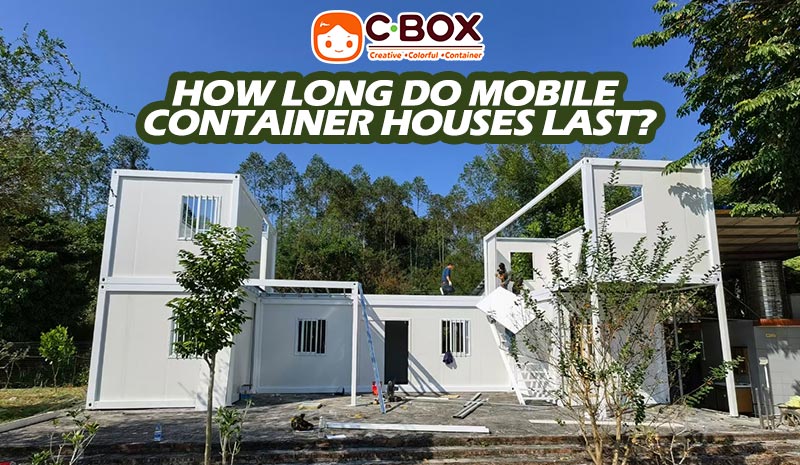
I. Data Speaks: The Actual Lifespan of CBOX's Exported Container Houses
The theoretical lifespan of CBOX's exported container houses under design standards is 12 to 15 years. However, in actual use, with proper maintenance, many products have been safely used for over 18 years in the UAE, Saudi Arabia, and other regions.
Specifically:
Main Steel Structure: Uses Q235B grade or higher galvanized steel, with a galvanized layer thickness of no less than 120 grams per square meter, providing 15 to 20 years of corrosion resistance.
Sandwich Panel Walls: Uses double-sided 0.5 mm thick color-coated steel plates, filled with 100 mm thick rock wool or polyurethane, maintaining thermal insulation performance for approximately 10 to 12 years.
Door and Window Sealing: EPDM rubber sealing strips age rapidly under the high temperatures of the Middle East; replacement every 3 to 4 years is recommended.
Overall Structural Lifespan: Under normal use and maintenance, the average actual lifespan of CBOX export container houses is 12 to 18 years.
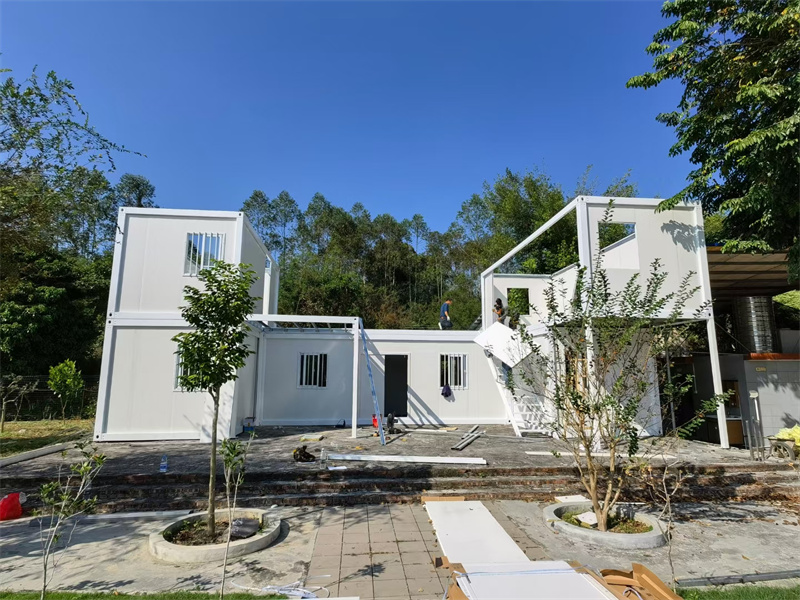
II. Four Core Advantages of Durable Prefabricated Container Houses in the Middle East
Compared to ordinary container houses or low-end domestic mobile homes, truly durable prefabricated houses suitable for the Middle Eastern market must possess the following characteristics:
First, adequate wind resistance. The Middle East experiences frequent sandstorms with instantaneous wind speeds exceeding 35 meters per second. Qualified prefabricated container houses must pass a structural test to withstand a force of 12 on the Beaufort scale. The roof and wall connections use hot-dip galvanized bolts instead of simple welding, a feature CBOX's export container houses excel in.
Secondly, they offer excellent thermal insulation. In the Middle East, summer outdoor temperatures often exceed 50 degrees Celsius, and the interior temperature of ordinary prefabricated houses can reach over 60 degrees Celsius, making them uninhabitable. Prefabricated container houses using 100mm thick polyurethane sandwich panels, however, can control the indoor-outdoor temperature difference to 12-15 degrees Celsius, achieving a comfortable temperature with the help of a small air conditioner.
Thirdly, they undergo thorough corrosion and rust prevention. In coastal areas like Dubai and Doha, the high salt content in the air causes ordinary steel plates to rust within six months. Durable prefabricated container houses in the Middle East must employ a double-layer protective system of hot-dip galvanized or zinc-rich primer and topcoat, with a total coating thickness of no less than 120 micrometers.
Fourthly, modular design facilitates replacement. Good prefabricated container houses use a standard modular design; wall panels, roof panels, doors, and windows are all independent, removable modules. When a part is damaged, only the corresponding module needs to be replaced, without the entire structure being scrapped.
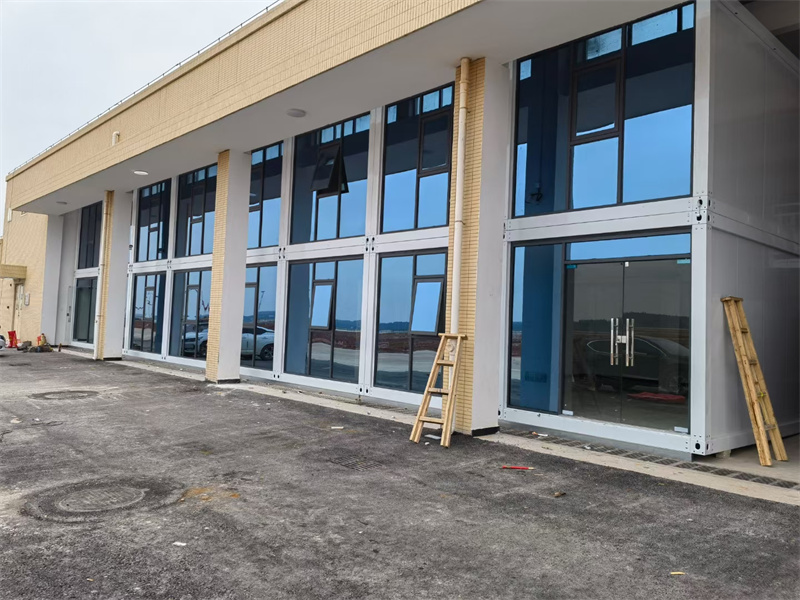
III. Four Key Factors Affecting the Lifespan of Prefabricated Container Houses
Even container houses exported to the Middle East can have significantly different lifespans due to the following factors:
1. Foundation Quality: Container houses installed on concrete floors have an average lifespan 5 to 7 years longer than prefabricated houses placed directly on sandy ground. Foundation settlement can lead to structural deformation and jammed doors and windows.
2. Local Climate Conditions: In the inland desert regions of the UAE, due to large diurnal temperature variations and strong ultraviolet radiation, the coating of the color-coated steel sheets ages approximately 30% faster than in coastal areas. It is recommended to repaint every 5 years.
3. Maintenance Frequency: Data shows that prefabricated container houses that undergo a comprehensive inspection annually (tightening bolts, repairing coatings, and replacing sealing strips) have a 41% higher structural integrity rate after 15 years compared to those without maintenance.
4. Internal Usage Intensity: When used as offices or warehouses, the wear and tear on floors and walls is far less than when used as worker dormitories. It is recommended to replace dormitory-type prefabricated container house floors every 8 to 10 years.
IV. How to Choose Truly Durable Prefabricated Container Houses?
For customers planning to purchase prefabricated container houses in the Middle East, the following suggestions are worth considering:
Request material testing reports: Pay close attention to the galvanized layer thickness (not less than 120 grams/square meter), the coating type of the color steel plate (polyester or fluorocarbon coating recommended), and the rock wool density (not less than 100 kilograms per cubic meter).
Inspect existing projects on-site: Request suppliers to provide case studies that have been in use for more than 3 years for on-site inspection, observing whether the walls are deformed, whether the welds are cracked, and whether the coating is blistering.
Calculate the total life cycle cost: Don't just look at the unit price. A cheap prefabricated container house priced at $1100 may only last 5 years, while a high-quality container house priced at $2200 can last for more than 15 years, resulting in a lower average annual cost.
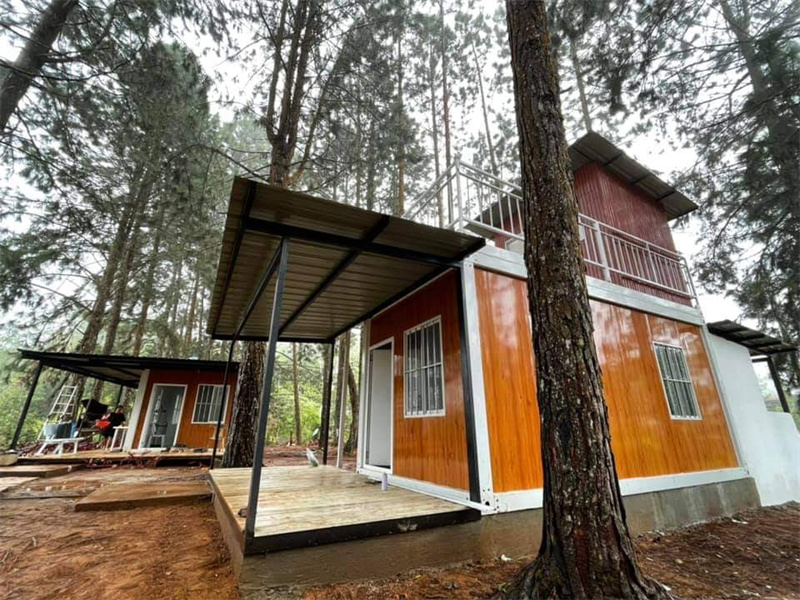
Conclusion
Choosing the right product, a prefabricated container house that lasts for 20 years is not a dream. The actual service life of mobile container houses in the Middle East is generally between 12 and 18 years, and some high-quality products can even exceed 20 years with proper maintenance. The key lies in selecting materials and specifications suitable for the local climate, ensuring proper installation, and establishing a regular maintenance system.
If you are looking for temporary or semi-permanent housing solutions for your Middle Eastern projects, CBOX's mobile container homes are undoubtedly a market-proven, cost-effective option. Remember this principle: spending 20% more on the initial purchase will result in more than double the lifespan and lower annual costs. Next time you purchase prefabricated housing, ask your supplier: How many summers can your product withstand the scorching Middle Eastern sun? The answer may be more reassuring than you imagine.





 rangkaian ipv6 disokong
 CALL US : +86 13631414627
 EMAIL : sales906@cbox.ltd


